Ethiopian Immigrants in America: What You Need in 2026
Discover key facts about Ethiopian immigrants in America in 2026, including population data and how to protect your status. Start with a free consultation.
Vasquez Law Firm
Published on April 9, 2026

Have questions? Talk to an attorney — free evaluation.
Call 1-844-967-3536Ethiopian Immigrants in America: What You Need in 2026
Ethiopian immigrants continue to shape communities across the United States, with significant populations in cities including Smithfield, North Carolina, and areas of Florida. In 2026, understanding the landscape of Ethiopian immigrants—who they are, where they live, and the challenges they face—can help you make informed decisions about immigration matters. This article covers statistics, the immigrant experience today, legal considerations, and resources to support Ethiopian immigrants living in America.
Need help with your case? Our experienced attorneys are ready to fight for you. Se Habla Español.
Need legal help?
Free 15-minute consultation. We handle immigration, traffic, family, criminal, and personal injury matters in NC and FL.
Or call us now: 1-844-967-3536
Quick Answer
In 2026, Ethiopian immigrants make up a growing and diverse community across the U.S., especially in North Carolina and Florida. They face unique challenges including legal status, employment, and cultural adaptation, but resources and legal protections exist to support them.
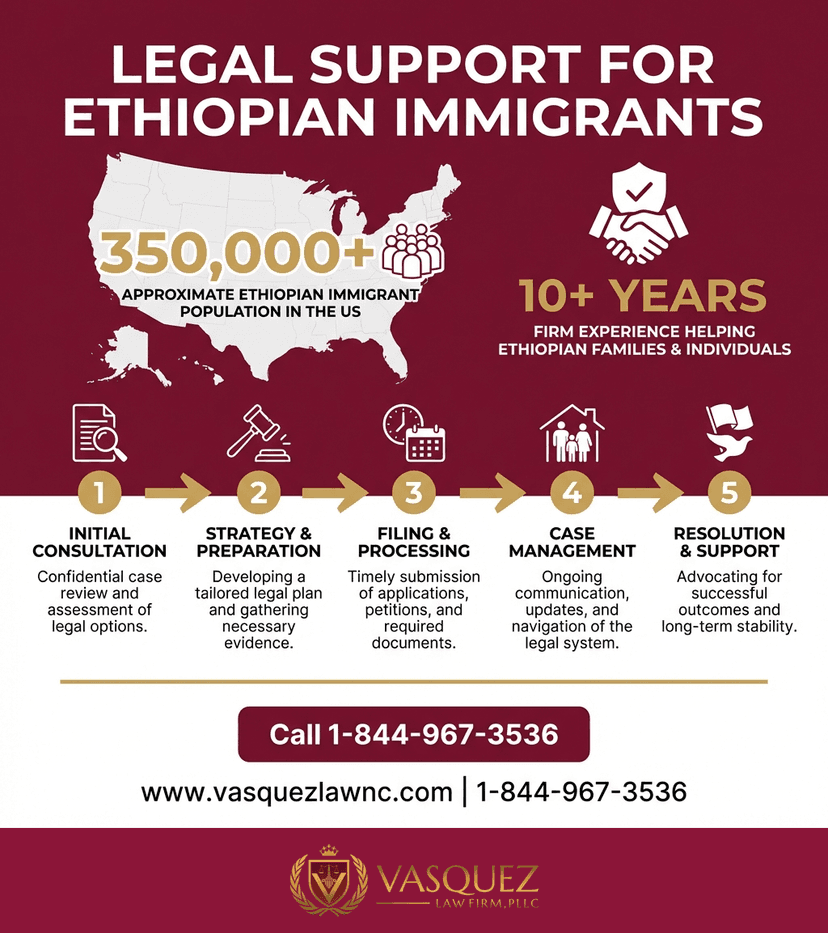
- Over 350,000 Ethiopian immigrants live in the U.S.
- Smithfield, NC is part of a growing Ethiopian community.
- Legal status options depend on individual circumstances.
- Federal immigration law governs most status changes.
- Local resources vary in North Carolina and Florida.
Ethiopian Immigrants Today: Population and Locations
As of 2026, approximately 350,000 Ethiopian immigrants live in the United States. This represents steady growth since 2020 when there were about 280,000 Ethiopian immigrants living here. The largest populations reside in states such as California, Washington, North Carolina, and Florida. Smithfield, North Carolina, has become a notable hub, offering community support and cultural ties.
Ethiopian immigrants bring rich cultural traditions, language diversity, and entrepreneurial spirit to their communities. Many Ethiopian Americans maintain strong connections to their heritage while integrating into their new surroundings. Understanding the demographics, including 'Ethiopian American population' and where they reside, helps tailor effective immigration support.
According to USCIS official guidelines, maintaining proper legal documentation is crucial for Ethiopian immigrants seeking to adjust their status or apply for citizenship. Local community centers and ethnic organizations in North Carolina and Florida also provide assistance for Ethiopian immigrants navigating these processes.
Where Do Ethiopian Immigrants Live?
- California – Largest concentration with over 70,000
- Washington – Approximately 45,000 residents
- North Carolina – Fast-growing with about 30,000, including Smithfield
- Florida – Close to 25,000 Ethiopian immigrants
- Other states – Spread across other urban areas nationwide
Population Trends and Statistics
Data shows Ethiopian immigrants today represent one of the fastest-growing African immigrant groups in the U.S. Many arrived as refugees during political conflicts and continue to seek better opportunities. Recent statistics indicate a rise in family reunification applications and employment-based immigration applications.
For more detailed immigration requirements, visit the USCIS official guidelines. Keeping up-to-date with these regulations is vital.
Challenges and Opportunities for Ethiopian Immigrants
Living in a new country involves overcoming substantial legal and social challenges. Ethiopian immigrants encounter barriers related to language, employment, adjusting immigration status, and cultural integration. For example, many face difficulties understanding the complex U.S. immigration system, which can affect their ability to maintain or adjust legal status.
Employment opportunities vary widely, with many Ethiopian immigrants working in service industries or starting small businesses. Challenges include credential recognition and workplace discrimination in some cases. However, community support networks and access to legal help can open doors for success.
Because immigration law is governed federally, Ethiopian immigrants in Smithfield, NC, and Florida must carefully follow USCIS procedures for visas, green cards, or naturalization applications. Legal advice specialized in immigration can make a significant difference in outcomes.
Legal Status and Protections
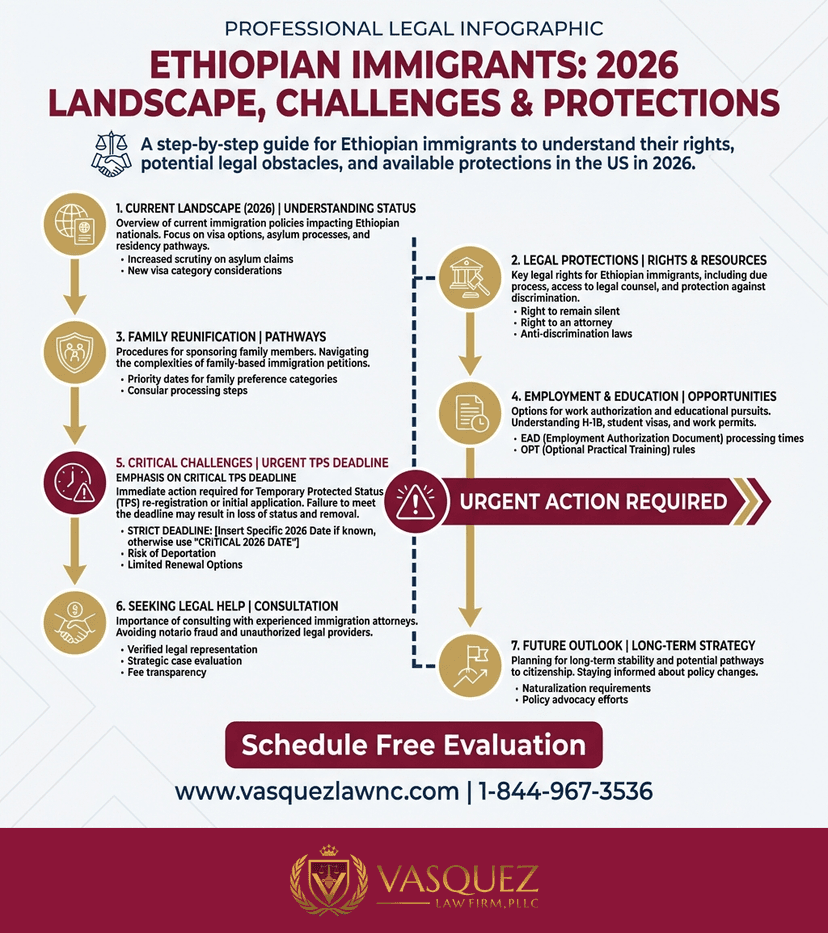
In 2026, Ethiopian immigrants may qualify for legal protections such as asylum or Temporary Protected Status if returning home poses risks. Others qualify for employment visas or family-sponsored petitions. Challenges arise when cases face delays or denial, making legal help essential.
The Executive Office for Immigration Review handles immigration court proceedings, where Ethiopian immigrants may appear during removal or other hearings. Understanding these processes helps immigrants better prepare.
Community and Cultural Strength
Ethiopian communities in America are known for strong family bonds and cultural preservation. Ethiopian ladies, in particular, are celebrated for maintaining traditional dress and food customs while contributing to the workforce and society. This mix of cultural pride and adaptation creates vibrant communities in Smithfield and other cities.
Step-by-Step: Navigating Immigration in NC and FL
- Determine Your Eligibility: Check if you qualify for adjustment of status, asylum, or other immigration benefits.
- Gather Documents: Birth certificates, passports, proof of arrival, employment, and family records are essential.
- File Applications Timely: Submit forms like I-485 or asylum requests according to USCIS deadlines.
- Attend Interviews and Hearings: Prepare by understanding procedures; legal representation can provide support.
- Stay Informed of Case Status: Use official channels to track your immigration case progress.
- Seek Legal Help Early: Contact immigration lawyers for advice particular to North Carolina and Florida laws.
Each step requires attention to detail and awareness of federal and state specifics. For example, local services in Smithfield may help with document translation and community integration.
Key Documents Checklist
- Valid passport and Ethiopian identification
- Visa or entry documents
- Immigration forms filed in the U.S.
- Proof of residence (leases, utility bills)
- Employment records and tax documents
- Birth or marriage certificates
Common Mistakes Ethiopian Immigrants Make
- Failing to maintain continuous legal status
- Delaying filing important immigration forms
- Not consulting an immigration lawyer early
- Using outdated or incomplete documents
- Misunderstanding eligibility criteria
- Ignoring interview preparation
- Not updating address with USCIS
- Overlooking state-specific requirements in NC or FL
- Relying solely on informal advice instead of official information
- Missing deadlines related to visa or work permits
If you only remember one thing: Always seek professional legal guidance and keep your immigration status current to protect your rights.
NC, FL, and Nationwide Notes
North Carolina Notes
North Carolina offers growing immigrant communities, including in Smithfield. Local nonprofits provide language and legal assistance. However, immigration law remains federal. It is important that Ethiopian immigrants comply with USCIS regulations and State Bar rules. Protected rights include access to public education for children and some health programs.
Florida Notes
Florida is home to a diverse immigrant population, with many Ethiopians in metropolitan areas. Access to local services varies widely; legal help is often necessary to navigate employment and status challenges. Florida state policies may affect healthcare and employment but not immigration law directly.
Nationwide Concepts
U.S. immigration law is primarily federal. Ethiopian immigrants must understand federal criteria for visas, asylum, and citizenship. The Dept. of State visa programs and USCIS adjudicate most applications. Nationwide, immigrants benefit from legal advice to protect their rights and prepare for immigration court if necessary.
When to Call a Lawyer Now
- When your immigration status is at risk of expiring
- If you receive a notice to appear in immigration court
- Before filing any immigration application or petition
- When you face delays or denials of benefits
- If you or family members face deportation or removal proceedings
- To understand eligibility for asylum or Temporary Protected Status
- After any encounter with immigration enforcement authorities
- If you want to apply for citizenship and need guidance
About Vasquez Law Firm
At Vasquez Law Firm, we combine compassion with aggressive representation. Our motto "Yo Peleo" (I Fight) reflects our commitment to standing up for your rights.
- Bilingual Support: Se Habla Español - our team is fully bilingual
- Service Areas: North Carolina, Florida, and nationwide immigration services
- Experience: Over 30 years helping clients navigate complex legal matters
- Results: Thousands of successful cases across multiple practice areas
Attorney Trust and Experience
Attorney Vasquez holds a Juris Doctor degree and is admitted to practice in both the North Carolina State Bar and Florida Bar. With over 30 years of dedicated legal experience, he has built a reputation for providing personalized attention and achieving favorable outcomes for his clients.
Don't wait to get the help you deserve. Call us now for immediate assistance. Se Habla Español.
Frequently Asked Questions
Which country has the most Ethiopian immigrants?
The United States hosts the largest Ethiopian immigrant population outside of Ethiopia. As of 2026, sizable communities thrive in states such as California, Washington, and North Carolina. Cities like Smithfield are becoming hubs for Ethiopian culture and support networks, offering access to legal and social resources.
What are Ethiopian ladies known for?
Ethiopian ladies are recognized for preserving their cultural heritage through traditional dress, cuisine, and community engagement. They often play important roles in family organization and cultural education, helping newer generations maintain ties to Ethiopian roots while adapting to life in America.
Are Ethiopians Arab or African?
Ethiopians are African and originate from East Africa. Despite religious and cultural interactions with Arab countries historically, Ethiopia is not an Arab nation. Its diverse peoples and languages reflect a rich African heritage unique to the region.
Why is Ethiopia on the red list?
Ethiopia has appeared on red listings related to U.S. travel and immigration due to internal political instability and conflict in recent years. These designations affect visa eligibility and asylum claims. However, policies frequently update, so always check current government resources for the latest information.
What's Your Immigration Situation?
Answer 3 questions — we'll tell you your options
Question 1 / 3
What best describes your situation?
Keep Reading
How many Ethiopian immigrants live in the USA in 2026?
About 350,000 Ethiopian immigrants reside in the U.S. as of 2026. This number reflects growth from previous years, including increasing family reunification and work visas. Major populations are found in North Carolina, Florida, and several other states.
What are important immigration steps for Ethiopian immigrants in Smithfield?
Key steps include securing proper documentation, timely filing of immigration forms such as adjustment of status applications, attending interviews and hearing appointments, and consulting with a qualified immigration lawyer familiar with North Carolina laws.
Can Ethiopian immigrants apply for citizenship in the USA?
Yes, after meeting requirements, such as five years of lawful permanent residence, good moral character, and residency, Ethiopian immigrants may apply for naturalization. Legal advice can help navigate the specific criteria and paperwork involved.
What rights do Ethiopian immigrants have in North Carolina and Florida?
They are protected by federal and state laws granting access to education, emergency healthcare, and labor protections. However, full eligibility for benefits often depends on immigration status. Knowing your rights and obligations is crucial in these states.
Sources and References
- U.S. Citizenship and Immigration Services (USCIS)
- North Carolina Courts
- Executive Office for Immigration Review
- U.S. Department of State Visa Information
Take the first step toward justice today. Our team is standing by to help. Se Habla Español.
Start Your Free Evaluation Now
Call us: 1-844-967-3536
Se Habla Español - Estamos aquí para ayudarle.
If you need legal assistance, learn more about our immigration law practice, or call us at 1-844-967-3536 for a free evaluation.
Vasquez Law Firm
Legal Team
Our experienced attorneys at Vasquez Law Firm have been serving clients in North Carolina and Florida since 2011, with 70+ years of combined attorney experience. We specialize in immigration, personal injury, criminal defense, workers compensation, and family law.
Related Legal Services
Need legal help? Learn more about our immigration law practice, or contact us for a free evaluation.
You can also visit our North Carolina immigration practice for more information.