How Habeas Corpus Works for Immigration Cases in Charlotte 2026
Learn how habeas corpus helps immigration cases in Charlotte in 2026. Understand your rights and start your petition today. Contact Vasquez Law Firm for help.
Vasquez Law Firm
Published on March 31, 2026

Have questions? Talk to an attorney — free evaluation.
Call 1-844-967-3536How Habeas Corpus Works for Immigration Cases in Charlotte 2026
Habeas corpus is a powerful legal tool that immigrants in Charlotte can use to challenge unlawful detention. In 2026, understanding how habeas corpus works in immigration court can protect your rights and potentially lead to release while your case is pending. Vasquez Law Firm assists North Carolina and Florida immigrants with habeas corpus petitions, helping secure freedom and due process. This article explains habeas corpus in simple terms, outlines the petition process, highlights common mistakes, and provides key steps immigrants should take to protect themselves.
Need help with your case? Our experienced attorneys are ready to fight for you. Se Habla Español.
Need legal help?
Free 15-minute consultation. We handle immigration, traffic, family, criminal, and personal injury matters in NC and FL.
Schedule Your Free Consultation
Or call us now: 1-844-967-3536
Quick Answer
Habeas corpus allows immigrants detained in Charlotte to challenge their imprisonment if it is unlawful. Filing a petition asks the court to review the detention's legality. With proper legal help, this may lead to release while their immigration case proceeds.
- Protects against indefinite or unlawful detention
- Allows fast court review of detention
- Requires showing detention lacks legal basis
- Common in immigration detention challenges
- Must be filed timely with supporting evidence
Understanding Habeas Corpus in Immigration
Imagine being detained by Immigration and Customs Enforcement (ICE) without clear legal justification. Habeas corpus is your right to demand a courtroom check on whether this detention is lawful. The term means 'you have the body' in Latin, reflecting the court's power to order the detained person be brought before a judge.
This right prevents government agencies from holding someone indefinitely without legal cause. It is rooted in the U.S. Constitution's Suspension Clause, which allows suspension only during rebellion or invasion, and even then, only when public safety demands it.
In immigration cases, habeas corpus petitions provide a vital tool for those fighting deportation or unlawful detention. Especially in Charlotte and across North Carolina and Florida, immigrants often face complex situations where detention may violate procedural rules or laws. Vasquez Law Firm's immigration attorneys understand how to file and argue habeas corpus petitions effectively to protect clients' liberty.
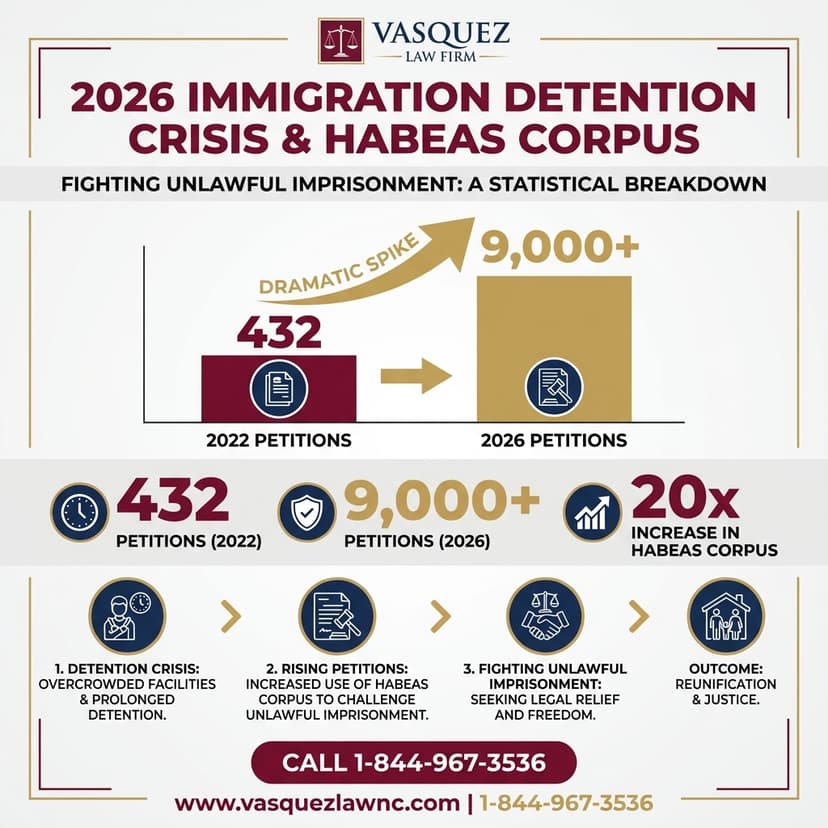
In 2026, habeas corpus remains a key remedy despite changing political climates. Notably, the Trump administration's immigration policies brought increased use of habeas corpus, and its nuances continue to affect cases today.
Learn more about our immigration services to understand how we assist clients with habeas corpus and other relief options.
What is Habeas Corpus in Spanish?
In Spanish, habeas corpus is often referred to simply as "habeas corpus" or sometimes described as "recurso de amparo contra la detención ilegal." It is an essential concept for Spanish-speaking immigrants. Knowing this term can help when consulting with attorneys or engaging in court proceedings.
How Did Habeas Corpus Feature in Trump Era Policies?
The Trump administration saw many immigrants detained under tough policies, increasing habeas corpus petitions aimed at challenging prolonged or unlawful detention. Courts had to balance government authority with protecting individual rights. This history shapes the landscape for habeas corpus in immigration in 2026.
How to Pronounce Habeas Corpus
You pronounce habeas corpus as 'HAY-bee-us KOR-pus.' The proper pronunciation reflects its Latin origin and is key when discussing legal rights clearly with officials and attorneys.
Step-by-Step Habeas Corpus Petition Process
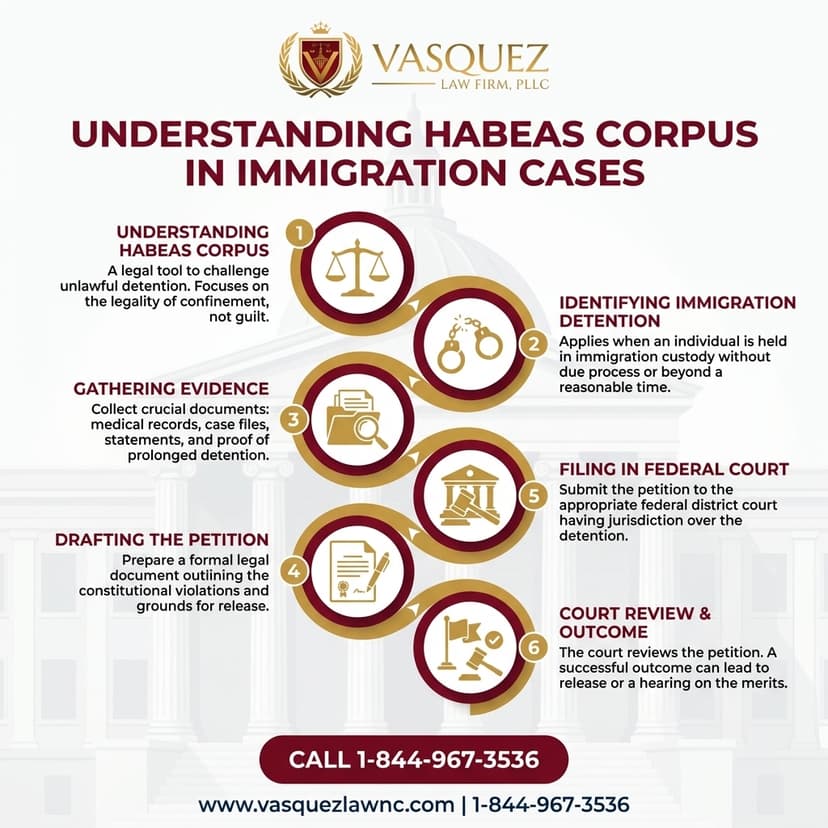
- Assess your detention: Work with an attorney to determine if habeas corpus is appropriate. Your case must involve unlawful or indefinite detention.
- Gather evidence: Collect documents like detention orders, charges, and any evidence showing procedural errors or constitutional violations.
- Complete the habeas corpus form: Precisely fill out the petition, stating why detention is unlawful. The form requires legal and factual arguments.
- File the petition: Submit the petition to the proper federal or immigration court. In Charlotte, this often means the Eastern District of North Carolina or immigration courts.
- Attend hearings: Be prepared to present or have your attorney argue the case at court hearings. Judges will review detention legality.
- Receive court decision: If successful, the court may order your release or remand for proper procedures. If denied, consult your attorney about appeals or other options.
Filing a habeas corpus petition is a complex process requiring legal expertise. Our Attorney Vasquez with 15 years of experience can guide you through each step confidently.
What Should the Habeas Corpus Petition Include?
The petition should clearly state your identity, detention details, grounds why the detention is unlawful, and any violations of rights or law. Submitting evidence to support these claims is critical to success.
Where to Find Habeas Corpus Forms?
Forms can be obtained from federal court websites or immigration court clerks. Many petitions require customized legal language, so attorney assistance is strongly recommended to avoid costly errors.
Common Mistakes to Avoid in Habeas Cases
- Missing deadlines: Waiting too long to file a petition can cause dismissal. Act promptly.
- Poorly drafted petitions: Vague or incomplete petitions often fail. Detailed legal and factual grounds are necessary.
- Ignoring jurisdiction: Filing in the wrong court wastes time and can cause delays.
- Lack of evidence: Unsupported claims weaken the case. Provide all relevant documentation.
- Not hiring an attorney: Self-representation risks procedural errors. Professional legal help improves outcomes.
- Failing to update the court: New information must be communicated timely during proceedings.
- Misunderstanding the law: Habeas corpus has limits and exceptions; unrealistic expectations lead to frustration.
If you only remember one thing: Immediate and thorough legal action with experienced counsel is crucial for habeas corpus success.
Timeline and What to Expect in 2026
- Week 1-2: Consult an attorney and gather documents.
- Week 3: Prepare and file the petition.
- Week 4-6: Court schedules hearings, possible emergency motions for immediate release.
- Week 7-10: Main hearing where attorneys present arguments and evidence.
- Week 11+: Judge issues decision; follow-up appeals if necessary.
Timelines vary depending on case complexity and court schedules. Vasquez Law Firm stays engaged throughout to keep you informed.
Costs and Fees: What Impacts the Price
- Court filing fees can range generally but vary by jurisdiction.
- Attorney fees depend on case complexity and legal work required.
- Fee waivers may be available for qualifying low-income individuals.
- Unexpected litigation delays can increase costs.
- At Vasquez Law Firm, we offer affordable consultations and transparent pricing tailored to each client’s situation.
NC, FL, and Nationwide Notes on Habeas Corpus
North Carolina Notes
Charlotte immigrants often file habeas corpus petitions in the Eastern District of North Carolina federal court or local immigration courts. Federal immigration detention centers are located in the region, making local legal support essential. Courts here follow federal statutes like 28 U.S.C. § 2241.
Florida Notes
Florida also hosts many immigration detention facilities. Habeas petitions are commonly filed in federal district courts there to challenge unlawful detention. Local legal nuances exist, so working with attorneys admitted in Florida is vital.
Nationwide Concepts
Habeas corpus is a federal right applicable across the U.S., but filing procedures and courts vary. It is always subject to federal immigration and criminal statutes. Importantly, some individuals face bars on habeas review depending on their removal or criminal history. Legal advice is key to navigating these complexities.
When to Call a Lawyer Now
- Your detention feels unlawful or prolonged without charges.
- You have missed important deadlines or hearings.
- You want to file a habeas corpus or related petition.
- You fear deportation and want to explore relief options.
- You received conflicting or unclear instructions from detention officers.
- New evidence supports wrongful detention.
- You want to appeal a denial of habeas relief.
- You feel your constitutional rights are violated during detention.
About Vasquez Law Firm
At Vasquez Law Firm, we combine compassion with aggressive representation. Our motto "Yo Peleo" (I Fight) reflects our commitment to standing up for your rights.
- Bilingual Support: Se Habla Español - our team is fully bilingual
- Service Areas: North Carolina, Florida, and nationwide immigration services
- Experience: Over 15 years helping clients navigate complex legal matters
- Results: Thousands of successful cases across multiple practice areas
Attorney Trust and Experience
Attorney Vasquez holds a Juris Doctor degree and is admitted to practice in both the North Carolina State Bar and Florida Bar. With over 15 years of dedicated legal experience, he has built a reputation for providing personalized attention and achieving favorable outcomes for his clients.
Don't wait to get the help you deserve. Call us now for immediate assistance.
Se Habla Español
Frequently Asked Questions
What is habeas corpus in simple terms?
Habeas corpus protects against illegal detention by allowing detained individuals to ask courts to review their imprisonment. It ensures you cannot be held without valid legal reason or trial. This right applies to immigrants detained by ICE or immigration courts, helping guard due process rights.
How many presidents have suspended habeas corpus?
Few presidents have suspended habeas corpus, mostly during major crises. Abraham Lincoln famously suspended it during the Civil War to address rebellion. The Constitution limits suspension to rebellion or invasion situations, so it remains rare in modern times.
What does the Constitution say about habeas corpus?
The Constitution’s Suspension Clause (Article I, Section 9) protects habeas corpus as a fundamental right, allowing suspension only during rebellion or invasion when public safety requires it. This guards individual freedom and prevents unlawful imprisonment.
What's Your Immigration Situation?
Answer 3 questions — we'll tell you your options
Question 1 / 3
What best describes your situation?
Keep Reading
What is another word for habeas corpus?
Habeas corpus is known as the “Great Writ,” an order to bring a detained person before a court. It acts as a key protection ensuring no one is held without lawful justification.
When was the last time habeas corpus was suspended?
The last federal suspension occurred during the Civil War under President Lincoln. Since then, courts have maintained strong protections, making suspension nearly unheard of today.
How do you pronounce habeas corpus?
It is pronounced “HAY-bee-us KOR-pus.” The phrase means “you should have the body,” reflecting its origin from Latin legal tradition.
What does a habeas corpus petition involve?
A petition challenges unlawful detention by presenting facts and legal reasons why the imprisonment lacks justification. It asks a court to order release if the detention is illegal.
What is the cost of filing a habeas corpus petition?
Costs vary with court fees and attorney charges but many courts waive fees for low-income individuals. Vasquez Law Firm offers free consultations to discuss affordable strategies tailored to your case.
Sources and References
- U.S. Citizenship and Immigration Services (USCIS)
- Executive Office for Immigration Review
- Federal Habeas Corpus Statute 28 U.S.C. § 2241
Take the first step toward justice today. Our team is standing by to help. Se Habla Español.
Start Your Free Consultation Now
Call us: 1-844-967-3536
Se Habla Español - Estamos aquí para ayudarle.
Vasquez Law Firm
Legal Team
Our experienced attorneys at Vasquez Law Firm have been serving clients in North Carolina and Florida since 2011, with 70+ years of combined attorney experience. We specialize in immigration, personal injury, criminal defense, workers compensation, and family law.
Related Legal Services
Need legal help? Learn more about immigration case consultation, or contact us for a free evaluation.
You can also visit statewide immigration legal services for more information.