What Happens When an Immigration Arrest Reporter is Detained?
Understand your rights if an immigration arrest reporter is detained in 2026. Learn what to do and how Vasquez Law Firm can help. Contact us for a free consultation.
Vasquez Law Firm
Published on March 7, 2026

Have questions? Talk to an attorney — free evaluation.
Call 1-844-967-3536What Happens When an Immigration Arrest Reporter is Detained?
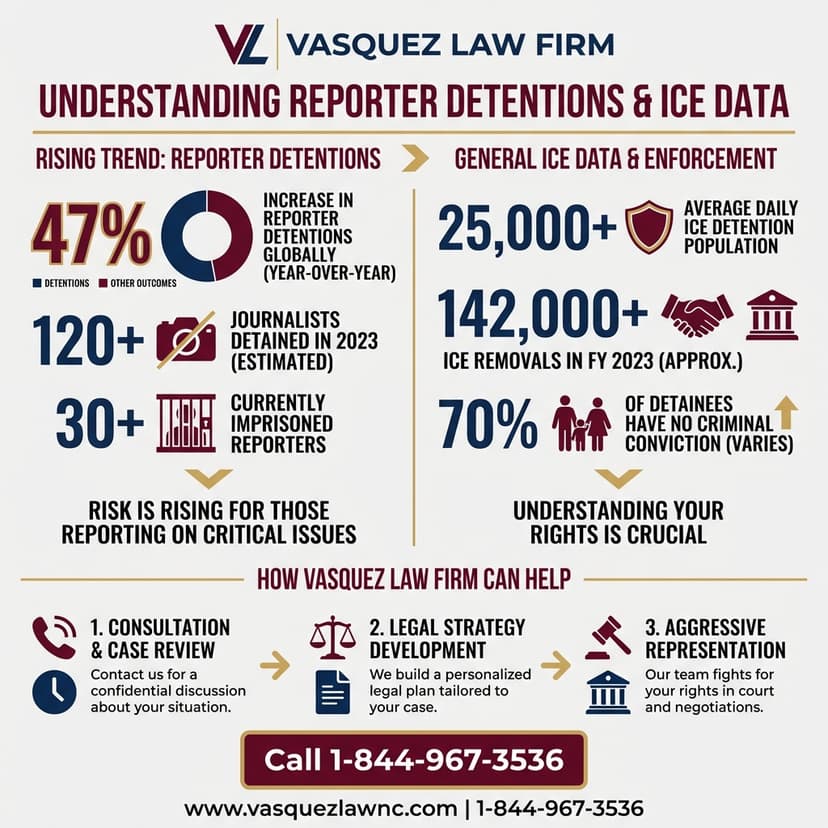
The detention of an immigration arrest reporter by authorities, such as the case of a Spanish-language news reporter in Tennessee in 2026, raises significant concerns about press freedom and immigrant rights. When a journalist covering immigration arrests is detained, it can send shockwaves through both the media community and immigrant communities, creating fear and uncertainty. This situation highlights the critical need for understanding the legal protections available to journalists and individuals, especially when interacting with federal agencies like ICE. Knowing your rights and the proper legal procedures is paramount to protecting yourself and upholding constitutional freedoms. Vasquez Law Firm is dedicated to assisting those impacted by such events, providing expert legal counsel and aggressive representation. Se Habla Español.
Need help with your immigration case? Our experienced attorneys are ready to fight for you. Se Habla Español.
Need legal help?
Free 15-minute consultation. We handle immigration, traffic, family, criminal, and personal injury matters in NC and FL.
Schedule Your Free Consultation
Or call us now: 1-844-967-3536
Quick Answer
When an immigration arrest reporter is detained, it typically involves questions about their legal status or alleged obstruction. This can lead to immediate questioning, potential arrest, and processing by immigration authorities like ICE. Key steps include asserting your right to remain silent, requesting an attorney, and not signing any documents without legal review.
- Demand to speak with a lawyer immediately.
- Do not answer questions about your immigration status.
- Refuse to sign any documents without legal counsel.
- Know your rights under the First Amendment and immigration law.
- Document the incident if safely possible (e.g., via a third party).
- Contact an immigration attorney promptly.
Understanding Immigration Reporter Detention and Rights
The arrest of a journalist, particularly an immigration arrest reporter covering sensitive operations, brings into focus the complex interplay between press freedom and immigration enforcement. Such incidents can be deeply unsettling, leaving individuals unsure of their legal standing. For example, a recent case involving a Spanish-language reporter in Nashville sparked national debate about the limits of immigration authorities' powers and journalists' protections.
Journalists, like all individuals in the United States, have constitutional rights, including those under the First and Fourth Amendments. The First Amendment protects freedom of the press, while the Fourth Amendment protects against unreasonable searches and seizures. However, these rights are not absolute and can be challenged when immigration authorities allege violations of federal law.
Understanding the specific grounds for detention is crucial. Was the reporter detained for alleged immigration violations, or for actions perceived as obstructing law enforcement? The distinction significantly impacts the legal strategy. It is essential to remember that even if immigration authorities assert a right to detain, individuals retain the right to legal representation and due process. Vasquez Law Firm actively monitors these developments to provide timely and effective counsel.
Legal Protections for Journalists and Immigrants
Journalists covering immigration enforcement operations, especially those acting as an immigration arrest reporter, often face unique challenges. While the First Amendment generally protects the right to gather news, this right is not without limitations. For instance, journalists do not have a constitutional right of access to places closed to the public simply because they are journalists. However, they do have the right to record in public spaces, including interactions between law enforcement and the public, as long as they do not interfere with official duties.
For individuals who are not U.S. citizens, the Fifth and Fourteenth Amendments still guarantee due process and equal protection under the law. This means that even during an immigration arrest, individuals have rights, such as the right to remain silent and the right to consult with an attorney. For example, the landmark Supreme Court case of Miranda v. Arizona, 384 U.S. 436 (1966), established the right to remain silent and the right to an attorney during custodial interrogation, which applies to all individuals, regardless of immigration status.
It's important to differentiate between voluntary questioning and custodial interrogation. If you are not free to leave, you are likely in custodial interrogation and should invoke your right to an attorney. Any statements made without legal counsel present could be used against you in immigration or criminal proceedings. Seeking immediate legal advice from an experienced immigration attorney is a critical first step to ensure these rights are protected, whether you are in Raleigh, North Carolina, or anywhere in Florida.
Step-by-Step: What to Do If Detained by Immigration
If you or someone you know, particularly an immigration arrest reporter, is detained by immigration authorities, acting quickly and correctly can significantly impact the outcome. These steps are crucial for protecting your rights and initiating a defense.
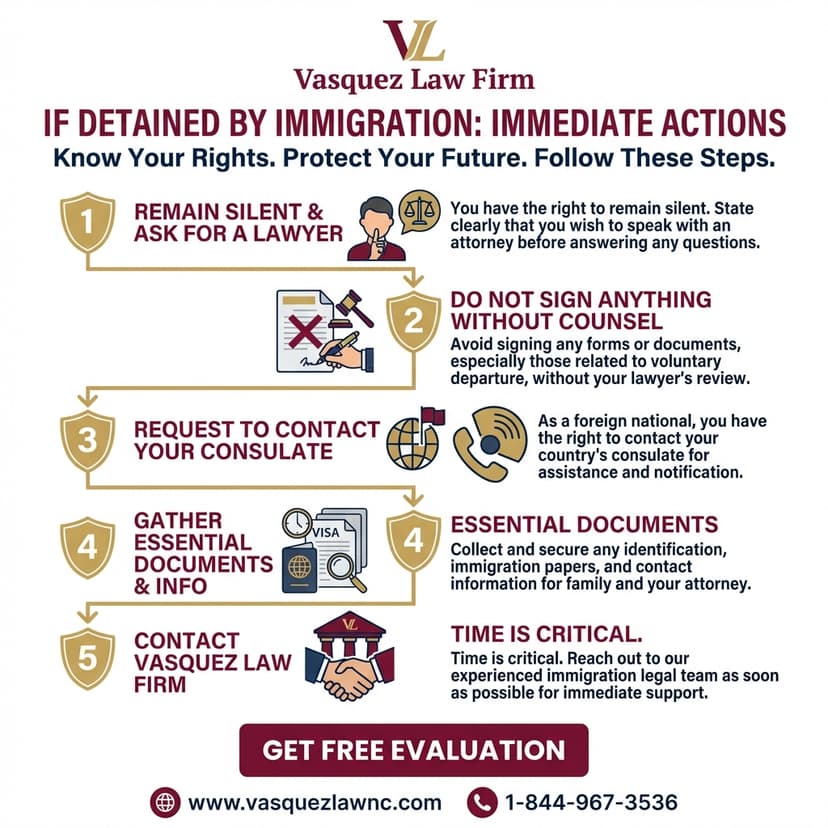
- Remain Silent and Do Not Resist: You have the right to remain silent. Do not answer questions about your immigration status, birthplace, or how you entered the U.S. State clearly, "I wish to remain silent and I want to speak with an attorney." Do not physically resist, even if you believe the detention is unlawful, as this can lead to additional charges.
- Do Not Sign Anything: Never sign any documents presented by immigration officers without first consulting an attorney. These documents could include a Notice to Appear (NTA), a voluntary departure agreement, or a waiver of rights. Signing without understanding the implications can severely jeopardize your case.
- Request an Attorney: Immediately and repeatedly ask to speak with an attorney. Immigration officers cannot prevent you from speaking with a lawyer. If they deny this request, note the names or badge numbers of the officers involved.
- Identify the Officers and Agency: If possible, ask for the officers' names, badge numbers, and the agency they represent (e.g., ICE, CBP). If you can, note the time, date, and location of the detention. This information is vital for your legal team.
- Contact Legal Counsel: As soon as you are able, or have someone contact on your behalf, reach out to an immigration attorney. Provide them with all the details of the detention, including any documents received. Vasquez Law Firm is available to provide urgent assistance.
- Inform Your Consulate: If you are a foreign national, you have the right to contact your country's consulate. Your consulate can provide assistance and ensure your rights are protected under international law.
Timeline: What to Expect After an Immigration Detention
The period immediately following an immigration detention can be confusing and stressful, but understanding the general timeline can help individuals prepare. While every case is unique, a typical path for an individual, including an immigration arrest reporter, might involve several stages.
- Initial Processing (Hours to Days): After detention, you will be transported to an ICE facility or a local jail contracted by ICE. Here, you will be fingerprinted, photographed, and interviewed. During this time, it is critical to invoke your right to remain silent and request an attorney.
- Bond Hearing (Days to Weeks): If you are eligible for bond, an immigration judge may set a bond amount. Paying this bond allows you to be released while your case proceeds. An attorney can argue for a lower bond or argue that you should be released without bond. Not all detainees are eligible for bond, especially those with certain criminal histories or prior deportation orders.
- Notice to Appear (NTA) (Days to Months): You will eventually receive a Notice to Appear (Form I-862), which is the charging document that officially places you into removal proceedings before an immigration judge. This document outlines the government's reasons for seeking your deportation.
- Immigration Court Hearings (Months to Years): Your case will proceed through a series of hearings in immigration court. This includes master calendar hearings and individual hearings. During these hearings, your attorney will present your defense, challenge the government's allegations, and apply for any forms of relief from removal you may be eligible for, such as asylum, cancellation of removal, or adjustment of status.
- Decision and Appeals (Months to Years): After all hearings, the immigration judge will issue a decision. If the decision is unfavorable, you may have the option to appeal to the Board of Immigration Appeals (BIA) and, in some cases, to a federal circuit court.
This process can be lengthy and complex, underscoring the importance of having skilled legal representation from the outset. Vasquez Law Firm works diligently to expedite these processes and protect client interests.
Common Mistakes and How to Avoid Them
Many individuals, including an immigration arrest reporter, make critical errors during immigration detention that can severely impact their case. Avoiding these common pitfalls is vital for a successful outcome.
- Talking to Immigration Officers Without a Lawyer: Any statements made can be used against you. Politely refuse to answer questions until your attorney is present.
- Signing Documents Without Understanding Them: Never sign anything presented by immigration officials without legal review. You could unknowingly waive crucial rights or agree to voluntary departure.
- Lying or Providing False Information: Providing false information to a federal agent is a serious offense and can lead to criminal charges or make you inadmissible for future immigration benefits.
- Not Knowing Your Rights: Ignorance of your rights means you cannot assert them effectively. Educate yourself or rely on your attorney to guide you.
- Failing to Inform Family/Friends: If detained, try to inform a trusted contact who can then reach out to an attorney on your behalf.
- Resisting Arrest: Physical resistance, even if you believe the arrest is unlawful, can result in additional criminal charges.
- Delaying Legal Counsel: The sooner an attorney is involved, the better your chances of a favorable outcome. Delays can lead to missed deadlines or loss of crucial evidence.
- Not Documenting the Incident: If possible, and safe to do so, try to document details of the arrest, including officer names, badge numbers, and specific allegations.
If you only remember one thing: Always assert your right to an attorney and remain silent. This is your most powerful protection during an immigration encounter.
NC, FL, and Nationwide Immigration Notes
Immigration law is primarily federal, meaning the core statutes and regulations apply uniformly across the United States, whether you are in North Carolina, Florida, or any other state. The Immigration and Nationality Act (INA) and regulations published in the Code of Federal Regulations (CFR) govern most aspects of immigration enforcement and benefits. However, the practical application and local enforcement priorities can vary by region and specific ICE field offices.
North Carolina Notes
In North Carolina, immigration enforcement activities, including arrests and detentions, are carried out by ICE (Immigration and Customs Enforcement) and CBP (Customs and Border Protection). Local law enforcement agencies in some areas of North Carolina, like Raleigh, may cooperate with ICE through programs such as 287(g) agreements, which allow specially trained local officers to perform certain immigration functions. This means a routine traffic stop could potentially lead to an immigration hold if an individual's immigration status is questioned. Vasquez Law Firm has extensive experience with immigration cases throughout North Carolina, from Raleigh to Charlotte.
Florida Notes
Florida also sees significant immigration enforcement due to its geographic location and large immigrant population. ICE and CBP operate extensively throughout the state, particularly in South Florida. Florida's state laws regarding cooperation with federal immigration authorities can also impact how detentions are handled. For instance, state legislation may mandate or restrict local law enforcement's ability to assist in immigration enforcement. Our firm serves clients across Florida, understanding the nuances of local enforcement practices from Miami to Orlando.
Nationwide Concepts
Regardless of location, certain fundamental principles of federal immigration law remain consistent. For example, the process for challenging a deportation order, applying for asylum, or seeking adjustment of status is governed by federal statutes and regulations. However, the availability of certain forms of relief, the discretion of immigration judges, and the specific policies of ICE field offices can differ. An experienced immigration attorney can help navigate these complexities, ensuring your rights are protected under federal law.
When to Call a Lawyer Now
If you find yourself in any of the following situations, especially as an immigration arrest reporter or an individual interacting with immigration authorities, immediate legal counsel is essential:
- You have been detained by ICE or CBP.
- You are asked to sign any immigration-related document.
- You are questioned about your immigration status by any law enforcement officer.
- You believe your rights are being violated during an interaction with authorities.
- You have received a Notice to Appear (NTA) in immigration court.
- You are facing deportation or removal proceedings.
- You are attempting to secure the release of a detained family member.
- You have a previous deportation order and fear re-arrest.
- You are a journalist who has been threatened or harassed while covering immigration issues.
- You need to understand the potential impact of a new immigration policy on your status.
About Vasquez Law Firm
At Vasquez Law Firm, we combine compassion with aggressive representation. Our motto "Yo Peleo" (I Fight) reflects our commitment to standing up for your rights and the rights of your family. With a deep understanding of the intricacies of immigration law, we advocate tirelessly for our clients in North Carolina, Florida, and nationwide.
- Bilingual Support: Se Habla Español - our team is fully bilingual and ready to communicate effectively in your preferred language.
- Service Areas: We provide dedicated immigration services across North Carolina, Florida, and throughout the United States.
- Experience: With over 15 years of legal experience, Attorney Vasquez brings a wealth of knowledge and a track record of successful outcomes in complex legal matters.
- Results: We have helped thousands of clients navigate challenging immigration processes, personal injury claims, and criminal defense cases.
Attorney Trust and Experience
Attorney Vasquez holds a Juris Doctor (JD) degree and is admitted to practice in both the North Carolina State Bar and Florida Bar. With over 15 years of dedicated legal experience, he has built a reputation for providing personalized attention and achieving favorable outcomes for his clients. His commitment to justice and his aggressive approach ensure that your case is handled with the utmost care and professionalism. Learn more about our team and Attorney Vasquez's qualifications.
Don't face your legal challenges alone. Our team is here to help you every step of the way.
Call today: 1-844-967-3536 | Se Habla Español
Frequently Asked Questions
Can an immigration arrest reporter be detained for doing their job?
While the First Amendment protects press freedom, it doesn't grant journalists immunity from general laws, including immigration laws. If a reporter is found to be in violation of immigration statutes or is alleged to be obstructing justice, they can be detained. However, detention solely for reporting in public spaces is generally unconstitutional. An attorney can help determine if rights were violated during a detention.
What rights does a non-citizen journalist have if detained by ICE?
Non-citizen journalists, like all non-citizens, have constitutional rights, including the right to remain silent, the right to an attorney, and protection against unreasonable searches and seizures. They should not answer questions about their immigration status or sign documents without legal counsel. These rights apply regardless of immigration status. Seeking legal advice is crucial.
How do I find out if someone is detained by immigration authorities in 2026?
To locate someone detained by immigration authorities, you can use the Online Detainee Locator System (ODLS) on the ICE website. You will need the individual's A-number (Alien Registration Number) or their name, country of birth, and date of birth. This system provides information on detainees held in ICE custody. An immigration lawyer can also assist with this search.
What is a Notice to Appear (NTA) and what should I do if I receive one?
A Notice to Appear (Form I-862) is a document issued by the Department of Homeland Security that formally initiates removal proceedings against a non-citizen in immigration court. If you receive an NTA, it is critical to contact an experienced immigration attorney immediately. Do not miss your court date, and do not attend without legal representation. An attorney can help prepare your defense and explore relief options.
What's Your Immigration Situation?
Answer 3 questions — we'll tell you your options
Question 1 / 3
What best describes your situation?
Keep Reading
Can I record ICE agents during an immigration arrest?
Generally, you have a First Amendment right to record law enforcement officers, including ICE agents, in public spaces, as long as you do not interfere with their duties. This right extends to an immigration arrest reporter. However, this right does not permit you to obstruct an arrest or interfere with official operations. Be aware of your surroundings and prioritize your safety. If you feel unsafe, do not engage.
What is the role of an immigration attorney after an arrest?
An immigration attorney's role is critical after an arrest. They can assert your rights, communicate with immigration authorities on your behalf, seek your release on bond, represent you in immigration court, and explore all possible defenses and forms of relief from removal. They also ensure due process is followed and protect you from self-incrimination. Our firm can help you navigate this complex process.
Are there different rules for immigration arrests in North Carolina versus Florida?
While federal immigration laws apply nationwide, local enforcement practices and cooperation agreements between ICE and local law enforcement can vary. States like North Carolina and Florida may have different policies or 287(g) agreements that impact how immigration arrests are conducted or how local police interact with federal agents. An attorney familiar with local nuances in Raleigh or Florida is beneficial.
What does "Yo Peleo" mean for Vasquez Law Firm clients?
"Yo Peleo" translates to "I Fight" in English, and it is the motto of Vasquez Law Firm. It signifies our unwavering commitment to aggressively advocating for our clients' rights and interests. It represents our dedication to fighting for justice, whether in complex immigration cases, personal injury claims, or criminal defense matters. We are your dedicated legal champions.
How can I protect my family if I am an immigration arrest reporter?
If you are an immigration arrest reporter, especially if you are undocumented or have mixed-status family members, it's crucial to have a safety plan. This includes knowing your rights, having an emergency contact list, designating a guardian for minor children, and consulting with an immigration attorney to explore all available legal protections for your family. Proactive planning is key.
What is the current immigration policy landscape in 2026?
As of 2026, the immigration policy landscape remains dynamic, with ongoing debates and potential legislative changes affecting enforcement priorities, border security, and pathways to legal status. It's crucial to stay informed through reliable sources and consult with an immigration attorney for personalized advice. Policies can shift rapidly, impacting individuals and families across the U.S. Our firm stays updated on all changes.
Sources and References
- U.S. Citizenship and Immigration Services (USCIS)
- Executive Office for Immigration Review (EOIR)
- 8 U.S. Code § 1229a - Removal proceedings
- First Amendment (Cornell Law School)
Ready to take the next step? Contact Vasquez Law Firm today for a free, confidential consultation. We're committed to fighting for your rights and achieving the best possible outcome for your case.
Start Your Free Consultation Now
Call us: 1-844-967-3536
Se Habla Español - Estamos aquí para ayudarle.
Vasquez Law Firm
Legal Team
Our experienced attorneys at Vasquez Law Firm have been serving clients in North Carolina and Florida since 2011, with 70+ years of combined attorney experience. We specialize in immigration, personal injury, criminal defense, workers compensation, and family law.
Related Legal Services
Need legal help? Learn more about NC immigration legal team, or contact us for a free evaluation.
You can also visit statewide immigration attorneys for more information.