What Is Workers Compensation and How Does It Work in 2026?
Learn what worker's compensation covers and how it works in 2026. Understand benefits and get help from Vasquez Law Firm. Call for a free consult.
Vasquez Law Firm
Published on March 30, 2026

Have questions? Talk to an attorney — free evaluation.
Call 1-844-967-3536What Is Workers Compensation and How Does It Work in 2026?
Workers compensation provides vital benefits for employees hurt or ill due to their job. In North Carolina, these laws ensure coverage for medical care and lost wages. Understanding workers compensation in 2026 is crucial to protect your rights and receive the benefits you deserve. This article discusses costs, insurance details, and helps you make informed decisions with guidance from Vasquez Law Firm's experienced workers compensation lawyers in Charlotte.
Need help with your case? Our experienced attorneys are ready to fight for you. Se Habla Español.
Hurt at work? You have rights.
NC workers' comp covers medical bills and lost wages — even for undocumented workers. 15-min call to see what you qualify for.
Schedule Your Free Consultation
Or call us now: 1-844-967-3536
Quick Answer
Workers compensation in North Carolina covers job-related injuries by providing medical treatment, wage replacement, and disability benefits. It is essential to report injuries promptly and follow claim procedures to qualify. Seeking help from a workers compensation lawyer in Charlotte can improve your claim success and ensure you receive fair benefits.
- Covers work-related injuries and illnesses
- Includes medical and wage replacement benefits
- Requires prompt reporting and proper filing
- Offers legal support options if claims are denied
- Varies by state but protects workers’ rights
What Is Workers Compensation
An electrician falls from scaffolding and fractures his leg on the job. Three days later, medical bills begin piling up. Workers compensation insurance steps in to cover his hospital costs and partial wages while he recovers. This protection is the core of workers compensation, a form of insurance designed to provide benefits to employees injured at work or who develop occupational diseases.
In North Carolina, the workers compensation system is governed by the NC Industrial Commission. Employers must carry workers compensation insurance or meet certain self-insured qualifications. This insurance pays for medical treatment, compensates for lost wages if recovery takes time, and offers benefits for permanent disability or death related to work injuries.
Workers compensation laws protect workers by ensuring they don't lose income and access necessary care after a workplace injury. In 2026, understanding the rules around workers compensation is critical, especially since these benefits help cover costs that regular health insurance often does not.
For residents in Charlotte or elsewhere in North Carolina, knowing what benefits you could receive and how to file a claim can make a significant difference when facing a work injury. If you experience difficulties, consulting with an experienced workers compensation lawyer can help you navigate the system clearly and get fair treatment.
Step-by-Step Process for Filing a Claim
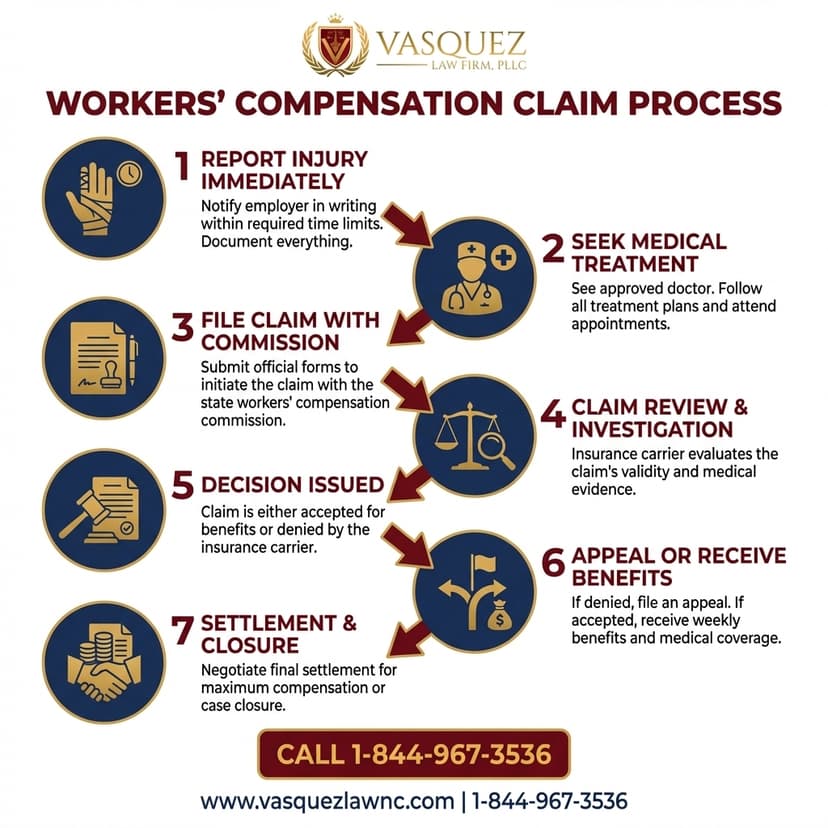
A factory worker in Charlotte twists her back on the job and notifies her supervisor immediately. Here is the general process workers in North Carolina should follow after a workplace injury to file a successful workers compensation claim.
- Report the Injury Promptly: You should report the injury to your employer as soon as possible, ideally within 30 days of it occurring. Delays can jeopardize your claim.
- Seek Medical Treatment: Get medical care to diagnose and treat your injury. Use authorized healthcare providers if your employer requests to control costs.
- File a Claim Form: Your employer or their insurance carrier should provide you with the necessary claim forms to submit to the NC Industrial Commission. You can also file a claim yourself online.
- Gather Documentation: Keep records such as medical reports, accident witness statements, and your job duties to support your claim.
- Follow Up and Attend Hearings if Needed: The NC Industrial Commission will evaluate your claim. If denied or disputed, you may attend hearings where an attorney can represent you.
Following each step correctly improves your chances for approval and timely benefits. If you face complex issues or denials, working with our Attorney Vasquez JD can help you appeal decisions or negotiate settlements.
Documents and Evidence Checklist
Proper evidence strengthens your workers compensation claim. Below are essential documents you should collect:
- Accident report or incident description
- Medical records and doctor’s notes
- Proof of lost wages or pay stubs
- Witness statements and contact information
- Employer injury and claim forms
- Photographs or videos of injuries or accident scene
- Any communications with insurance or employer
Maintaining organized, complete documentation can prevent delays and denials. If you feel overwhelmed, our workers compensation lawyers in Charlotte can assist with gathering critical evidence.
Timeline: What to Expect
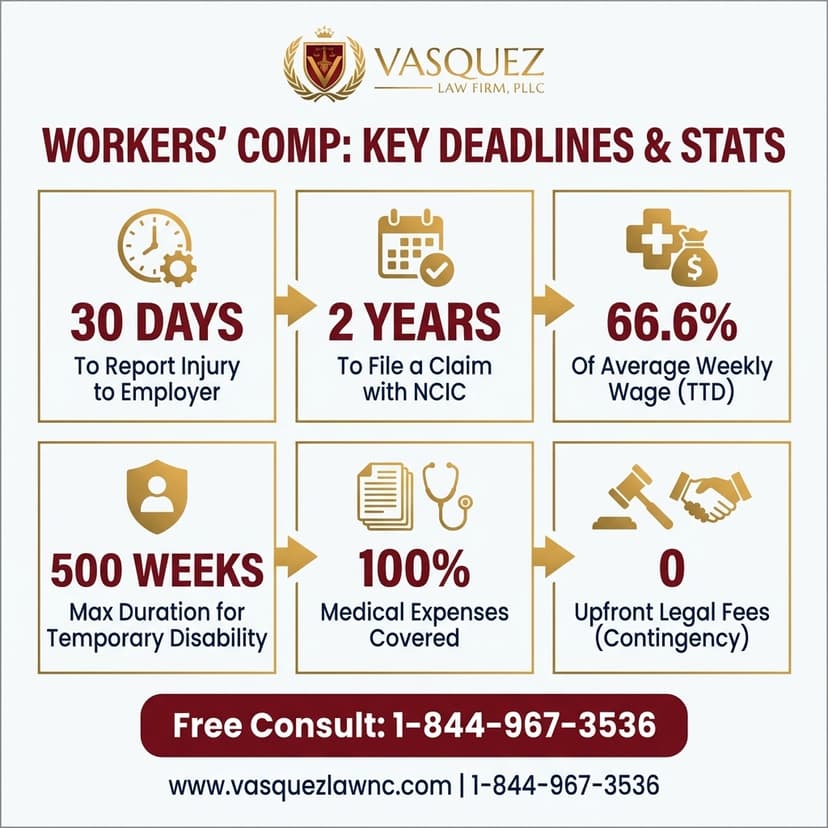
After a workplace injury, timing is vital. Your injury must be reported to your employer within 30 days. You then have up to two years to file a formal claim with the NC Industrial Commission.
Once filed, medical evaluations typically occur within weeks to assess your condition. Claim decisions can take one to three months, but delays are possible. If you disagree with the outcome, you have one year to appeal.
Here is a standard timeline:
- Day 0: Injury occurs
- Within 30 days: Report injury to employer
- Within 2 years: File claim with NC Industrial Commission
- Weeks 1-4: Medical evaluation and treatment
- Weeks 4-12: Claim review and decision
- Up to 1 year after decision: Appeal period
Staying aware of deadlines and following up promptly can help ensure you receive benefits without interruption.
Costs and Fees Associated with Claims
Filing a workers compensation claim usually does not require upfront fees. Most workers compensation lawyers, including those at Vasquez Law Firm, work on contingency – they get paid only if you receive a settlement or award.
Your employer pays for workers compensation insurance coverage as a legal requirement to handle workplace injuries. This insurance covers your medical bills and part of your lost wages but does not affect your personal credit.
Costs that may affect your claim include:
- Medical expenses exceeding coverage limits
- Legal fees if you hire a lawyer (usually a percentage of your benefits)
- Potential penalties if required timelines are missed
- Future care or rehabilitation costs depending on injury severity
Consulting with a workers compensation lawyer early helps you understand and minimize potential costs or complications.
Common Mistakes to Avoid
- Delaying Injury Report: Report injuries immediately to avoid claim denials.
- Failing to Follow Medical Directions: Skipping medical appointments weakens claim evidence.
- Ignoring Deadlines: Missing filing or appeal deadlines leads to loss of benefits.
- Not Documenting Injuries Properly: Keep detailed records and photos of injuries and treatments.
- Accepting Quick Settlements: Settling without legal advice may undervalue your claim.
- Communicating Carelessly: Avoid discussing your injury or claim details on social media or with unauthorized parties.
- Not Hiring an Attorney When Needed: Complex or denied claims benefit from experienced legal support.
If you only remember one thing: Act quickly, report your injury, and seek legal advice early to protect your rights under workers compensation laws.
Workers Compensation Laws: NC, FL, and Nationwide
North Carolina Notes
North Carolina requires most employers to provide workers compensation insurance governed by the NC Industrial Commission. Benefits include medical treatment, wage replacement, disability payments, and death benefits. Rules set clear timelines to report injuries and file claims. The system is no-fault, meaning you do not have to prove employer negligence to qualify.
Florida Notes
Florida’s workers compensation laws differ as some employers are exempt. However, employees in Florida may receive benefits similar to those in North Carolina, such as medical care and wage replacement through workers compensation insurance or alternative liability coverage. Florida has the Division of Workers’ Compensation to oversee claims.
Nationwide Concepts (General Only)
Workers compensation is state-regulated, and rules vary widely. Generally, it requires mandatory insurance for employers, benefits for work-related injuries, and limits lawsuits against employers. Federal workers compensation programs exist for specific industries like federal employees or maritime workers, but most claims are handled at the state level.
When to Call a Workers Compensation Lawyer
- Your claim has been denied or disputed
- The insurance company is delaying benefits unjustly
- Your injury causes long-term or permanent disability
- You are offered a lowball settlement without explanation
- Medical bills or lost wages are not fully covered
- You are unsure about your rights or claim paperwork
- The employer retaliates or pressures you not to file
- You need help with an appeal or hearing process
- Complicated injuries or exposure to hazardous substances
Contacting an experienced workers compensation lawyer in Charlotte early can protect your benefits and keep the claims process moving smoothly.
About Vasquez Law Firm
At Vasquez Law Firm, we combine compassion with aggressive representation. Our motto "Yo Peleo" (I Fight) reflects our commitment to standing up for your rights.
- Bilingual Support: Se Habla Español - our team is fully bilingual
- Service Areas: North Carolina, Florida, and nationwide immigration services
- Experience: Over 15 years helping clients navigate complex legal matters
- Results: Thousands of successful cases across multiple practice areas
Attorney Trust and Experience
Attorney Vasquez holds a Juris Doctor degree and is admitted to practice in both the North Carolina State Bar and Florida Bar. With over 15 years of dedicated legal experience, he has built a reputation for providing personalized attention and achieving favorable outcomes for his clients.
Don't wait to get the help you deserve. Call us now for immediate assistance.
Se Habla Español
Frequently Asked Questions
What injuries qualify for workers compensation?
Workers compensation covers injuries or illnesses that occur as a direct result of your job or work environment. This includes physical injuries from accidents, repetitive stress injuries like carpal tunnel, and occupational illnesses caused by workplace conditions. Coverage depends on state-specific rules; for example, North Carolina includes most full-time and part-time employees under its workers compensation rules.
Am I Eligible for Workers' Comp?
3 quick questions to check your eligibility
Question 1 / 3
Where were you injured?
Keep Reading
How long do I have to file a workers compensation claim in North Carolina?
In North Carolina, you generally must report your work injury to your employer within 30 days. The formal claim with the NC Industrial Commission should be filed within two years of the accident or diagnosis of the work-related condition. Missing these deadlines can result in losing benefits, so prompt action is critical after an injury.
What types of workers compensation benefits can I receive?
Workers compensation benefits typically cover medical treatment costs, temporary wage replacement if you cannot work, permanent disability payments for lasting injuries, and rehabilitation expenses. If a worker dies because of a job injury, survivors may qualify for death benefits. Benefits vary by state and the injury's circumstances.
How is a workers compensation settlement determined?
A workers compensation settlement is typically negotiated between the injured worker, employer, and insurance company. Factors include the severity of the injury, medical expenses, lost wages, and future care needs. Settlements must often be approved by the state Industrial Commission to protect workers’ rights and ensure fair compensation.
Does workers compensation cover psychological injuries?
In some cases, psychological injuries caused by workplace conditions such as harassment or stress may be covered by workers compensation. North Carolina law requires that the stress or mental injury be directly related to the job and medically diagnosed. Coverage for psychological injuries can be complex, so consulting a workers compensation lawyer is advised.
What should I do if my workers compensation claim is denied?
If your workers compensation claim is denied, you have the right to appeal the decision. Filing an appeal requires strict adherence to deadlines and careful documentation. An experienced workers compensation lawyer can help you gather evidence, prepare your case, and represent you during hearings to increase your chances of approval.
How much does it cost to hire a workers compensation lawyer?
Most workers compensation lawyers work on a contingency fee basis, meaning you pay no upfront costs. They receive a percentage of the settlement or award if you win the case. This arrangement allows injured workers to seek legal help without financial risk. Fees vary but are regulated by state law to protect clients.
Can I receive workers compensation benefits if I am an independent contractor?
Independent contractors often are not covered by workers compensation insurance because they are not classified as employees. However, some states and situations provide exceptions. If injured, it's important to review your contract and state laws carefully and consult a lawyer to explore any potential claims.
Sources and References
- NC Industrial Commission official site
- Department of Labor Workers Compensation Program
- OSHA Workers Rights and Safety
- N.C. Gen. Stat. § 97-2 - Workers Compensation Act
- 29 C.F.R. Part 18 - Administrative Hearings
Take the first step toward justice today. Our team is standing by to help.
Start Your Free Consultation Now
Call us: 1-844-967-3536
Se Habla Español - Estamos aquí para ayudarle.
Vasquez Law Firm
Legal Team
Our experienced attorneys at Vasquez Law Firm have been serving clients in North Carolina and Florida since 2011, with 70+ years of combined attorney experience. We specialize in immigration, personal injury, criminal defense, workers compensation, and family law.
Related Legal Services
Need legal help? Learn more about our workers comp law practice, or contact us for a free evaluation.
You can also visit our NC work injury attorneys for more information.